Is Marloth Park safe?
Last checked 26 October 2026
Yes, if you take the same care you would anywhere in South Africa. Marloth is a quiet holiday town, and for most visitors the biggest worry is a monkey in the kitchen. Lock up when you go out, give the animals space, drive slowly after dark and save 112 in your phone.
Looking after the house
You come into Marloth through a boom gate, where you sign in with security, and a security company patrols and answers alarms. Marloth isn't walled in like a security estate. The stands are open so the animals can move through, which means the house itself keeps you secure. Most holiday houses have burglar bars and an alarm or panic button linked to the security company. Ask your host how theirs work when you arrive.
A few habits we all keep here:
- Lock doors and close windows when you leave a room, even if you're only out at the braai or the pool. It keeps the monkeys and baboons out too.
- Ask your host which security company responds, and keep its number handy.
- Don't open the gate to strangers who arrive asking for work or directions.
- Keep cash and valuables out of sight, and don't leave things in the car overnight.
- If anything looks off, tell your host's security company, or phone the police on 08600 10111 (Crime Stop).
Booking safely
Book through a platform or an agent you can check. Be careful of anyone who asks you to pay into a new account at the last minute, and confirm the stand number and check-in details with the host before you drive out. Our before you book checklist has the questions to ask.
Living with the animals
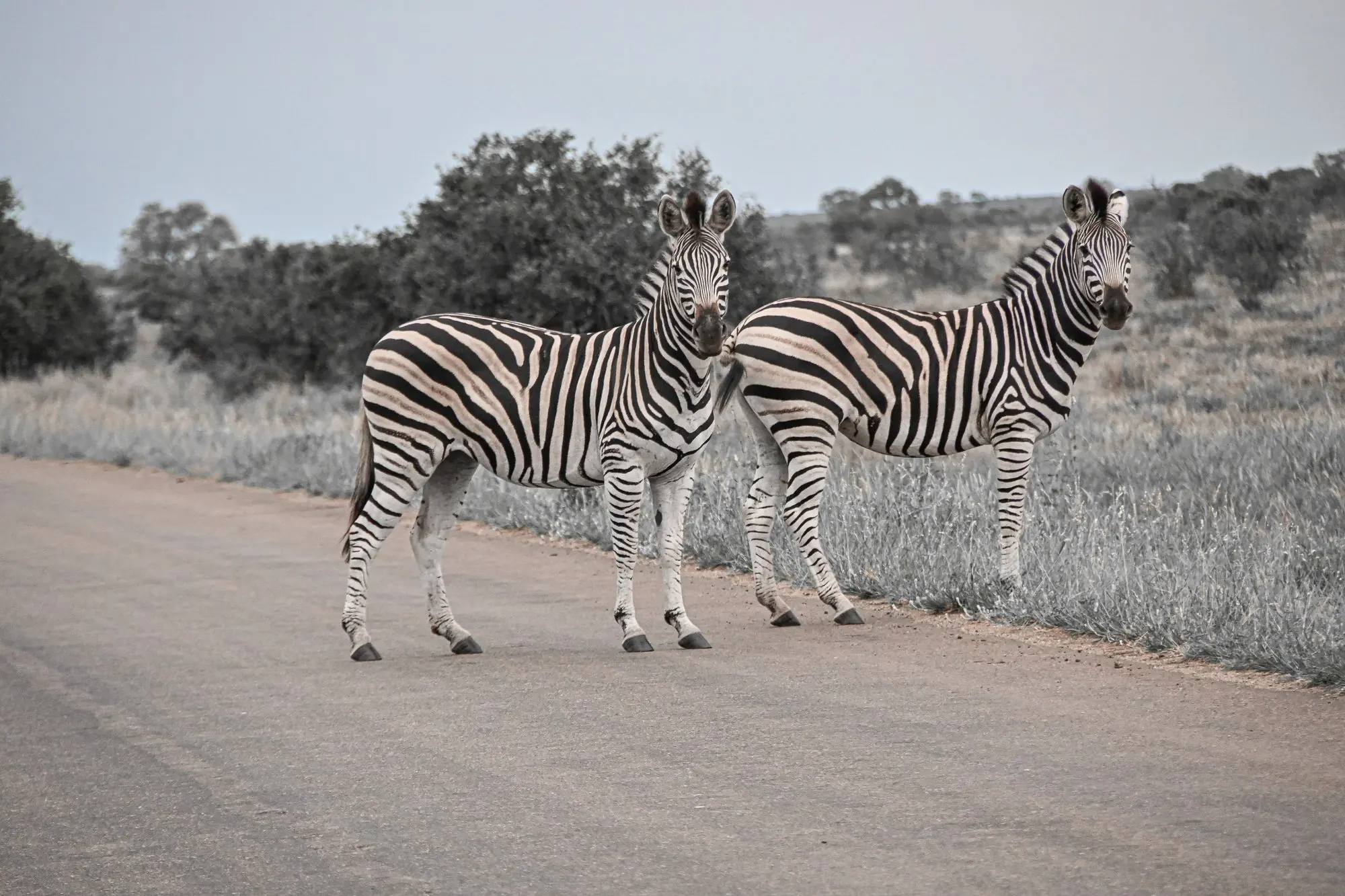
Everything that walks past your stoep is wild, even the ones that look tame. Kudu and nyala bulls have horns, warthogs have tusks and zebra kick, so give them right of way and enjoy them from a few metres back. Never feed animals by hand. Baboons and monkeys get bold quickly once they link people with food, so keep food inside and doors closed.
Lion and buffalo live in Lionspruit, the fenced reserve in the south of Marloth. Very occasionally one comes through the river fence from Kruger. If you see a lion, leopard or buffalo outside Lionspruit, go indoors or get into your car and let your host know, so the municipal rangers can be called.
Snakes live in the bush too, and they keep out of your way. Wear closed shoes and use a torch outside after dark. If one gets into the house, close the door to that room and ask your host to call a snake remover.
Driving at night
There are no street lights, and animals stand on the roads after dark. The speed limit is 50 km/h on Olifant Road and 30 km/h on the other roads, and at night it pays to go slower. Walking, running and cycling on the roads aren't allowed from 18:00 to 06:00.
Try to arrive in daylight, through the tarred Tenbosch turn-off from the N4. Getting here has the route.
Health
Marloth is in a malaria area, with the most risk from September to May. The malaria page has what to do. The nearest private hospitals with emergency units are in Mbombela, about 100 km away, so look through the emergency page when you arrive.
Who it suits
Marloth suits people who enjoy a self-catering house in the bush and are happy to take the usual precautions. If you'd like a lodge reception and staff around you all day, a lodge inside Kruger or a private reserve may suit you better.
Read next
All Questions pages- EmergencyMarloth Park emergency numbers: 112 from a cell phone, 10111 police, ER24 084 124, Netcare 911 082 911, and the nearest hospital emergency units.
- RulesMarloth Park rules for guests: 50 km/h on Olifant Road, 30 km/h elsewhere, antelope pellets only, no pets, no spotlights or off-road driving, fire safety.
- First visitYour first stay in Marloth Park: the gate and stand numbers, animals in the garden, feeding rules, no pets, power and water, shops and night driving.