Your first visit to Marloth Park
Marloth works a little differently from other holiday towns. Here's what first-time guests need to know, in the order you'll need it.
Arrive in daylight if you can, through the tarred Tenbosch turn-off from the N4 (Gate 2), and have your stand number ready for the security gate. Expect animals in the garden and no fences between the houses. Feed them only antelope pellets, never by hand. Leave pets at home, drive slowly, and buy most of your groceries before you arrive or in Komatipoort or Malelane.
The gate and your stand number
Marloth Park has two gates off the N4. Coming from Mbombela or Johannesburg, the first turn-off leads to a gravel road that is often in poor repair. Skip it and carry on 6 km along the N4 to the tarred Tenbosch turn-off, which leads to Gate 2. Getting here has the full route.
At the gate you sign in with security. Houses in Marloth are found by stand number (erf number) and house name, so ask your host for both, plus the street name and how you'll get the keys. Many hosts use a key safe or arrange for you to collect the keys, and some have a cut-off time for check-in. There are no street lights, which makes houses hard to find after dark, so save the location in your phone's map before you set off.
Is it fenced?
Not between the houses. The by-laws keep stands open so the animals can move and graze, and they don't allow high fences or walls. A low wooden fence around a small area, such as a pool, is fine. Lionspruit, the game reserve where the lion and buffalo are kept, is fenced, and a veterinary fence runs between Marloth and Kruger along the Crocodile River.
Animals in the garden
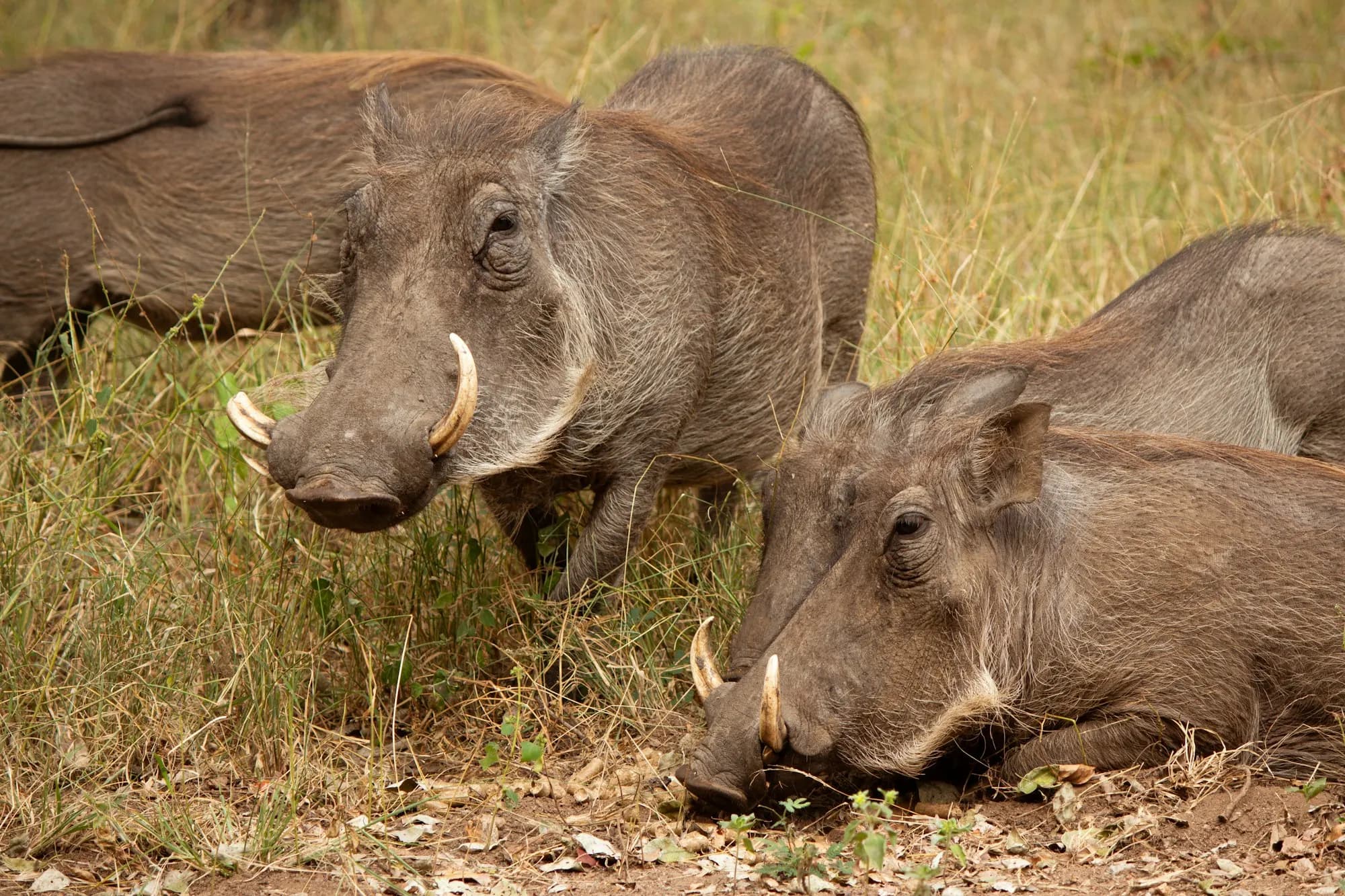
Expect visitors. Kudu, nyala, impala, zebra, warthog, wildebeest and giraffe walk through the gardens, and mongoose, baboons and vervet monkeys come looking for food. At night, listen and look for bushbabies in the trees. The animals at the house are often the best part of a stay here. The wildlife guide shows what you're likely to see.
They're wild animals, even when they walk right up to the stoep. Give them room, keep children close, and never get between a mother and her young.
What you can feed them
Feed the animals antelope pellets and wild bird seed only, and never by hand. You can buy pellets in Marloth's shops. Bread, sweets, chips and braai leftovers make the animals sick, some foods make kudu seriously ill, and mealies can kill some animals. Don't feed baboons or monkeys at all, and don't leave food, rubbish or open doors where they can get to them, because they learn fast and come back. You don't need to feed anything to see animals. They'll come past anyway.
No pets
Pets aren't allowed in Marloth Park, even for a weekend, and there are signs at both gates. Domestic animals can carry diseases to the wildlife here and across the river in Kruger. Book a kennel or a sitter before you leave home.
Power, water and Wi-Fi
Power and water both go off from time to time, sometimes for days after storms or cable theft. When you book, ask:
- Is there backup power (solar, an inverter or a generator), and what does it run?
- Is there a water tank, and is the water safe to drink?
- Which rooms have aircon? Summer days are often over 30°C.
- Are there mosquito screens on the windows?
- How fast is the Wi-Fi? It can be slow, so ask if you need to work online.
The before you book checklist has the full list.
Shops and supplies
Marloth has small shops for basics, pellets and firewood, a filling station and a few restaurants. The bigger supermarkets, pharmacies and banks are in Komatipoort (20-30 km away) and Malelane (40-45 km), so stock up on the way in. Some restaurants close early, so check before you head out for dinner. See shops and places to eat.
Driving, especially after dark
The speed limit is 50 km/h on Olifant Road and 30 km/h on the other roads. The limits are there for the animals, which step onto the road without warning. At night there are no street lights, so drive slower still and watch the verges. Many side roads are gravel, and some are rough after rain. Don't walk or cycle on the roads after dark.
Stay on the road, and don't shine a spotlight on the animals. Driving onto the veld and spotlighting are both against the rules.
Health and safety
Marloth Park is in a malaria area, with the highest risk from September to May. Read the malaria page and see a doctor before you come. Save the emergency numbers in your phone, and read is Marloth Park safe? for the everyday precautions.
Kruger
Crocodile Bridge gate is 15-20 km away. Check the gate times and fees, and in school holidays read up on quotas and pre-booking before you go.
Leaving
Take your rubbish with you or put it where your host asks, because monkeys, baboons and mongoose raid bins left outside. Recyclables go to one of the gates. Before you go, make sure the braai is out and the coals are dead.