Zebra in Marloth Park
Zebra in Marloth move about in small families, grazing the verges and the open stands. They look like ponies and behave like wild horses, so enjoy them from a little way off.
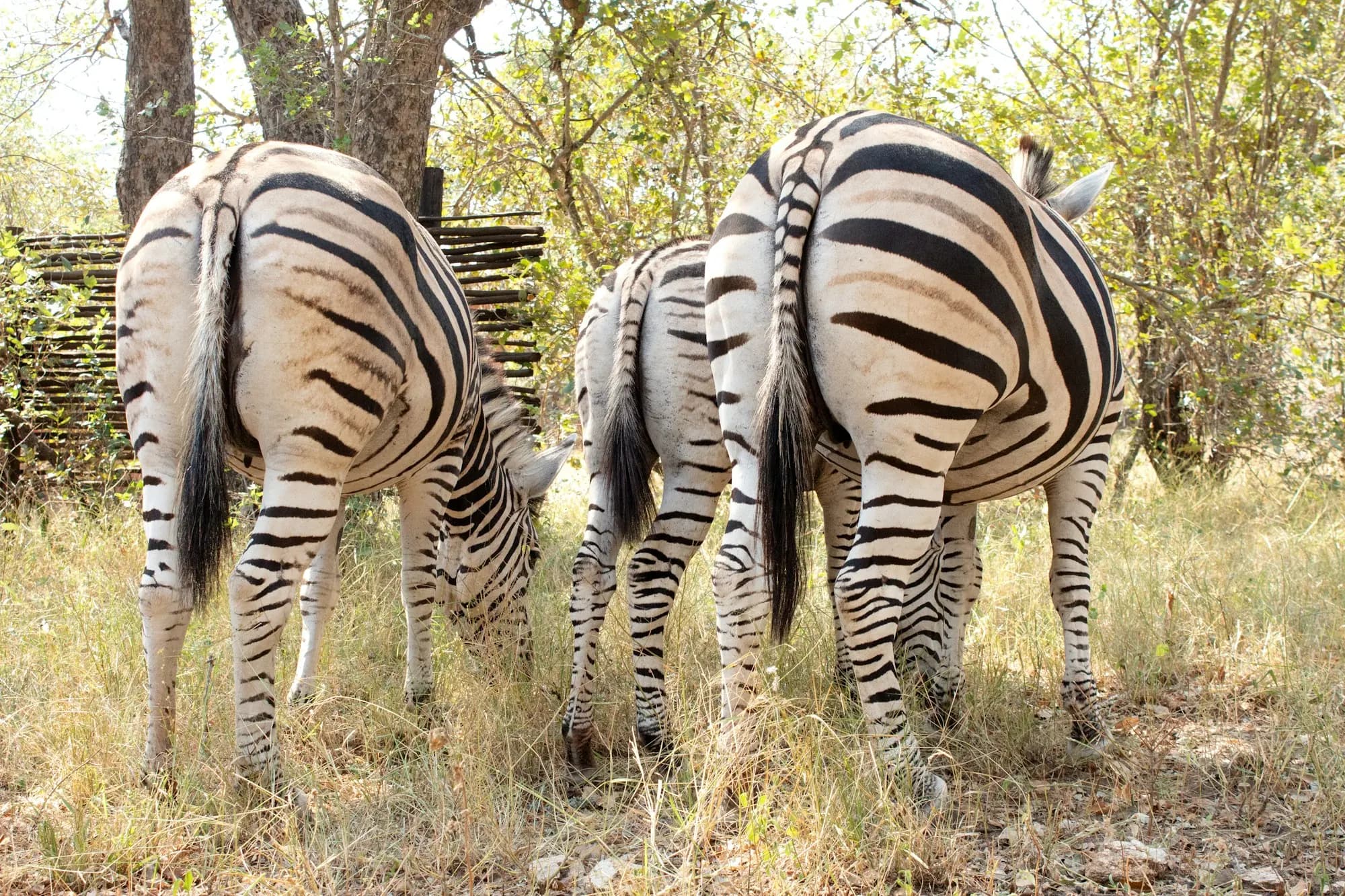
Zebra in Marloth Park live in small family groups, one stallion with a few mares and their foals, and graze the verges and open stands. They kick and bite, so watch them from the car or the stoep. If you put food out, the rule is antelope pellets and wild bird seed only, never by hand.
What zebra look like
The zebra here are plains zebra, also called Burchell's zebra. Zebra this far south have faint brown "shadow stripes" between the black ones. No two zebra have the same stripes, so if the same family visits your house each day, you can learn to tell them apart.
Stallions and mares
It's hard to tell them apart at a glance. A stallion is heavier, at 220-322 kg against 175-250 kg for a mare, and has a thicker neck. Behaviour gives him away more easily: he's the one who steps up to face trouble, and he'll attack a hyena or wild dog to protect his family.
Where and when you'll see them
Zebra are grazers. They eat mostly grass, with some leaves and twigs in the dry season, so you'll find them on the verges, the open stands and anywhere the grass is short. They need to drink often and seldom go more than 10-12 km from water.
A family stays together for months or years. Young males leave and join bachelor groups of up to 15 until they're ready to win mares of their own.
The 2024-25 count found 64 zebra in Marloth, down from 80 the year before, and 45 were moved to reserves near Hoedspruit in October 2025. You'll see them in Lionspruit too.
What they eat and the feeding rule
You'll see zebra whether you feed them or not. If you do put food out, the rule is antelope pellets and wild bird seed only. Scatter it on the ground and stand back. Mealies and bread make them ill.
Never hand-feed a zebra. They bite, and they kick.
How close is too close
Watch the ears. A zebra that presses its ears back flat against its head feels threatened, and that's your sign to back off. Zebra also give a sharp two-note alarm call when something worries them.
Never walk up behind a zebra or between a mare and her foal. Stay on the stoep or in the car, and keep children close when a family is grazing near the house.
Foals
Mares carry their foals for about a year and have one at a time. In Kruger next door, most foals are born in the wet summer months, October to March.
A newborn foal can stand almost straight away and starts nibbling grass within a week. Its stripes are brown and white at first and darken as it grows.
Photographing zebra
Stripes are hard on a camera. Bright midday sun makes the white glare and the black lose detail, so early morning, late afternoon or a cloudy day works better. A family standing close together makes a good picture, with the stripes blending into each other. Shoot from the car or the stoep, and let them carry on grazing.
Questions people ask
Are zebra dangerous?
They're wild horses, and they kick and bite. Admire them from the car or the stoep, never walk up behind one and never feed by hand.
How do you tell a male zebra from a female?
The stallion is heavier, with a thicker neck, and he's the one who stands his ground when the family is disturbed. From a distance it's often hard to be sure.
When are zebra foals born?
Mostly in the summer rains, October to March. Foals have browner stripes for their first months.
Where can I see zebra near Marloth Park?
On the verges and open stands in Marloth, in Lionspruit and across the river in Kruger. Our wildlife guide covers the other animals, and the rules page has the rest of Marloth's rules.